The operating range, power requirements, and duty cycle of a work machine or vehicle determine what kind of battery system is technically viable and cost-effective over its lifecycle.
Blog – Company
Choose the Battery System Size According to Use, not Kilowatt-hours
Published: 21.01.2026
One of the most persistent misconceptions is the idea that the larger the battery capacity, the better. In heavy-duty vehicles and work machines, this is rarely true. The load is intermittent: two hours of operation, a break, then another work period. When the battery system is sized according to this real duty cycle, oversizing can be avoided. Kilowatt-hours that are not actually needed unnecessarily tie up capital and increase weight and costs without delivering real benefits, notes Senior Sales Manager Sami Nikkinen of IONCOR Oy.
Accurate sizing is based on three core variables: how much peak and continuous power is required, where and at what intervals the battery can be charged, and how long the equipment must be available without interruptions. When a battery system is selected based on this information, an electric solution can be clearly more cost-effective over its lifecycle. Fuel costs are eliminated, maintenance needs are reduced, and downtime is shortened, which increases utilization, improves productivity, and makes electrification a more profitable overall option.
For example, a city bus runs a predetermined route, consumes energy at a known level, and is charged according to a planned schedule. Based on this data, it is possible to calculate how much energy the system requires and what kind of discharge and charging power the battery must be able to handle. Different chemistries serve different needs: LTO enables extremely high discharge power, NMC offers a good balance of energy and power density, while LFP is a stable and cost-effective option. What all applications have in common is that “one battery does not fit all.” Each chemistry has its own use case, and the battery must always be sized according to the machine’s actual work, Nikkinen emphasizes.
A reliable lifecycle partner for electrification
IONCOR is one of Europe’s largest independent battery system suppliers, with experience from more than three million manufactured battery systems. The company’s new focus is the development and manufacturing of its own batteries for work machines and heavy-duty vehicles. This is backed by decades of experience in mass production and automotive industry quality requirements.
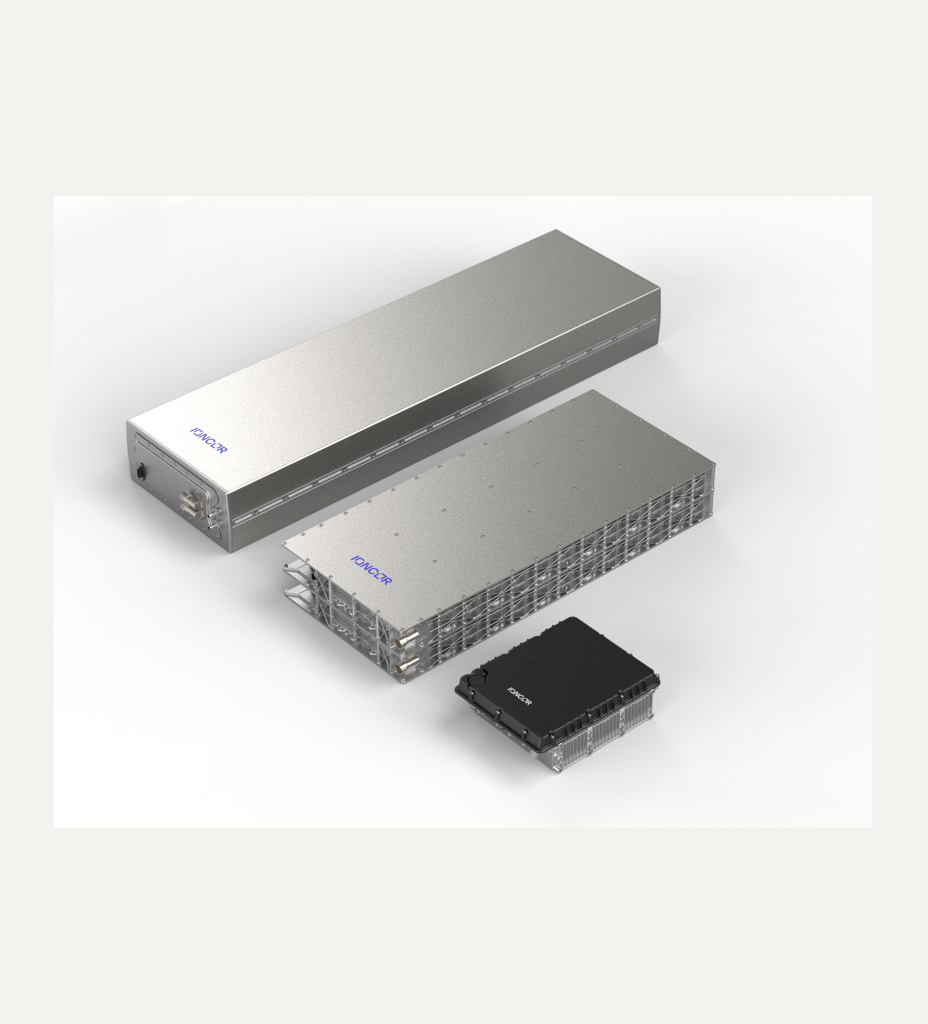
In the modular battery system platform, multiple battery packs can be connected in parallel, allowing energy to be scaled as needed and power and capacity to be precisely sized to the requirements of each application. All packs are controlled by IONCOR’s own battery management system, making integration and interface customization straightforward for customers. Because IONCOR is not tied to a single cell manufacturer, the most suitable battery chemistry in terms of performance and cost-efficiency can be selected for each application.
“We are not just a battery supplier, but a partner that supports the customer throughout the entire electrification lifecycle from design and simulations to prototype series and serial production. We are a ‘lifetime partner for electrification.’ The lifecycle of work machines is long, and our own manufacturing ensures that compatible battery packs will also be available in the future,” Nikkinen promises.
IONCOR’s competitive advantage can be summed up in three words:
• Volume – established serial production ensures delivery reliability and scalability.
• Quality – refined processes and long-standing manufacturing and testing experience ensure reliability.
• Price – large volumes and proprietary technology enable a competitive overall solution.
Read the article (in Finnish) here
This article was originally published on Dec 16, 2025 in a supplement of Kauppalehti.
Author: Kati Halonen